
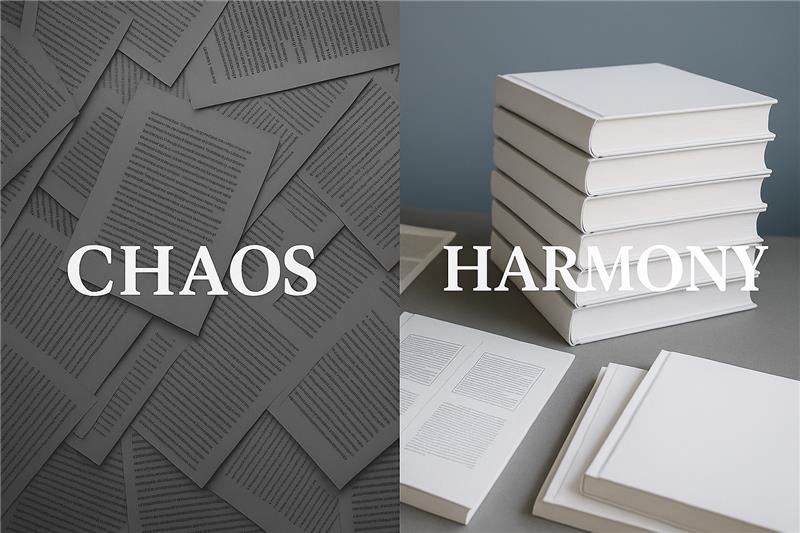
Arranging of pages on bigger sheet in a way that after printing, folding and binding they fall in sequential order is imposition.
Book production has diversified from high-volume runs to single-copy. Layout planning for book production, influenced by binding method, size, orientation, press format, and spine alignment. Flat unbound jobs are that require free shape nesting and ganging is relatively easier than book imposition.
Let us look at different types of book bindings that effect print layout creation or book printing-
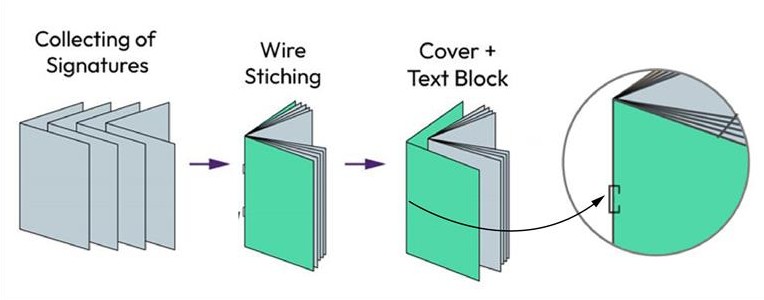
Saddle-Stitch
Books with shorter lifespans, such as magazines and journals, are typically bound using this method, where the pages are stapled along the spine.
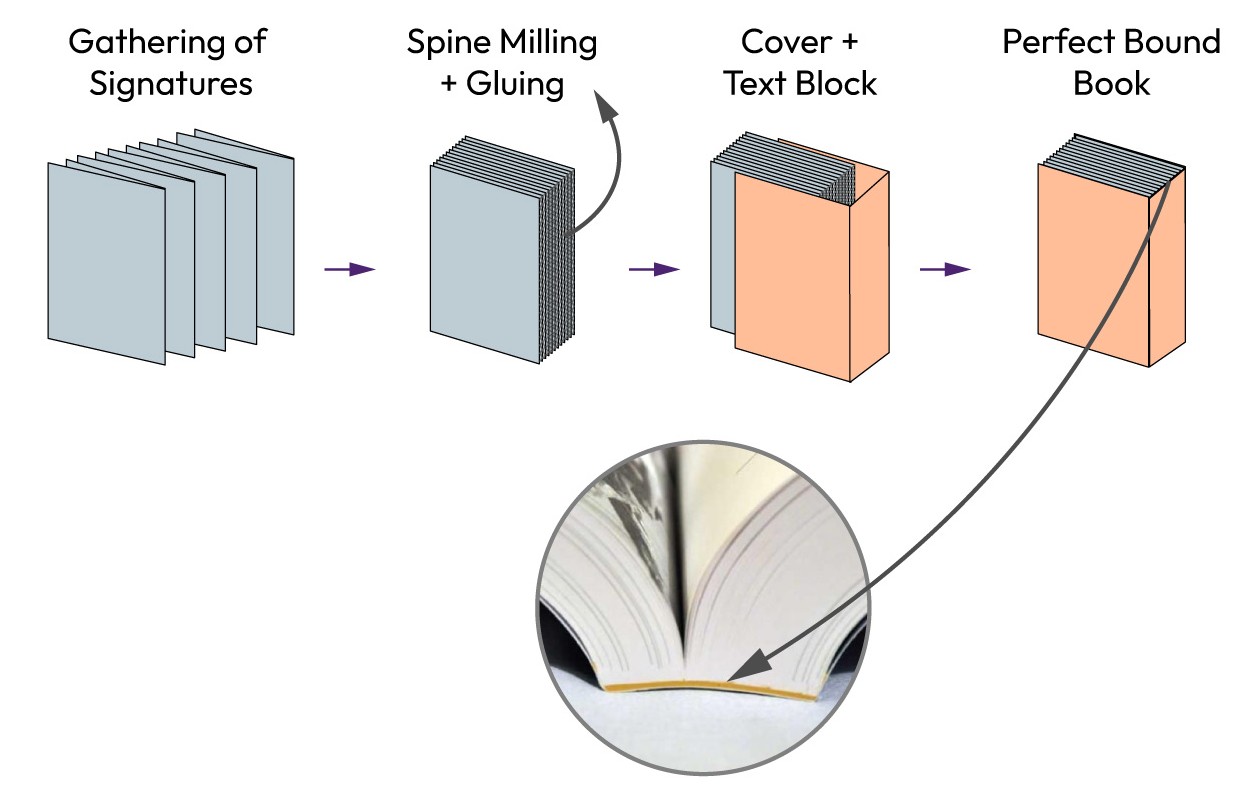
Perfect-Bound
Perfect-Bound (Stacked) Imposition is a printing layout technique where pages are arranged sequentially in stacks for binding with glue along the spine. Unlike saddle-stitching, pages are stacked flat and trimmed after binding, creating a clean, professional looking book or magazine. This method is ideal for thicker publications with higher page counts.
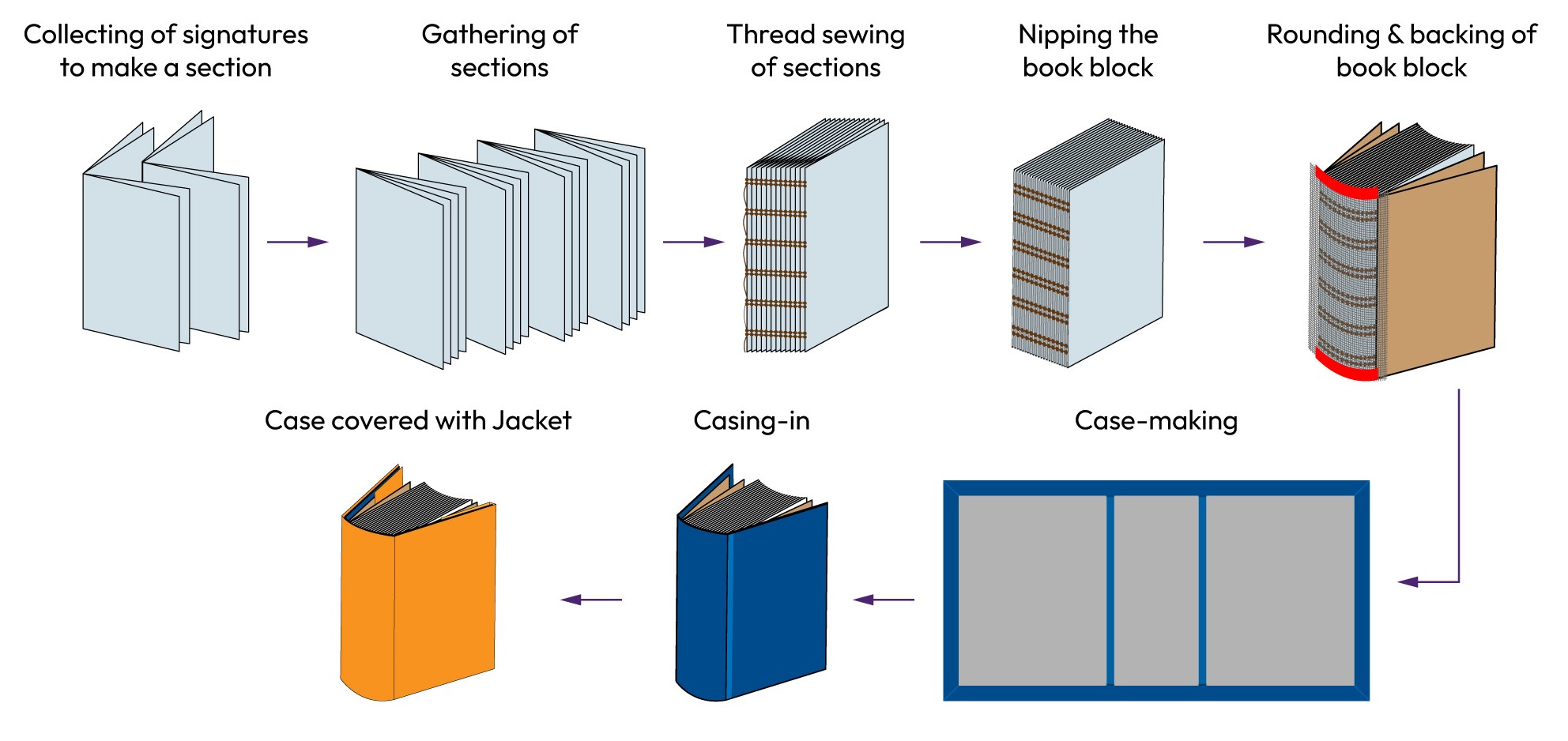
Section Sewing
Case binding (or side sewn binding) is commonly used for high-quality books with a longer lifespan, offering durability and a premium finish. In addition to the inner pages, it often includes components such as jackets, hardcovers, and endpapers. The printed sheets are folded into sections (signatures), gathered in sequence, sewn through the fold, and then bound together.
Right and top Spine books
Most books have the spine on the left for left-to-right reading, while Arabic and Hebrew books use a right spine for right-to-left reading. Some formats, like booklets and calendars, use a top spine, where the page topology adapts to the design—for example, continuous reading or flip-style display.
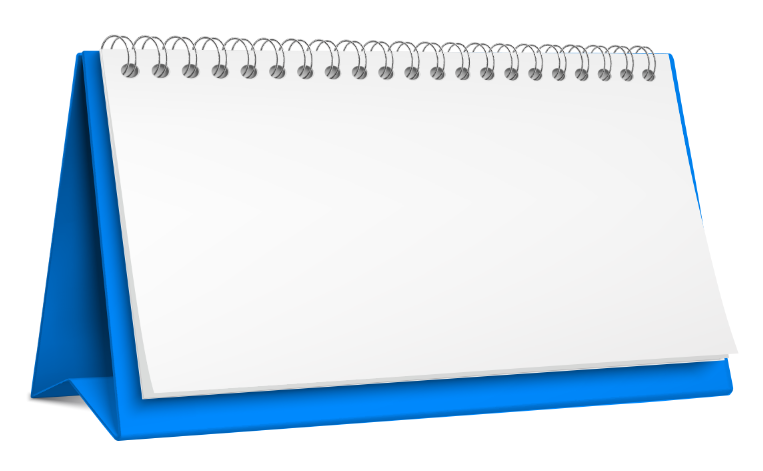
N-Up Book Imposition
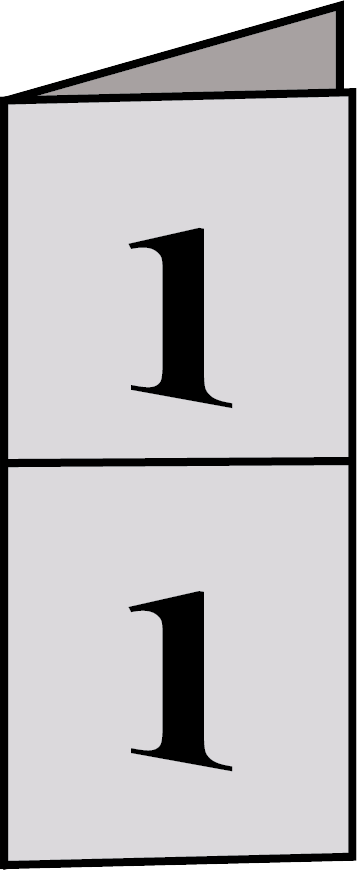
In this multiple Ups of same page are arranged on large sheet. it ideal for small-sized books. This method improves cutting, handling, and binding efficiency. It maximizes press usage, reduces waste, and speeds up production, making it highly effective for high-volume printing and accurate assembly.
This method is applied when the book size is smaller than the minimum binding machine size. In this method, two or more copies (ups) are produced together and separated after binding and final trimming.
Cut-and-Stack Imposition
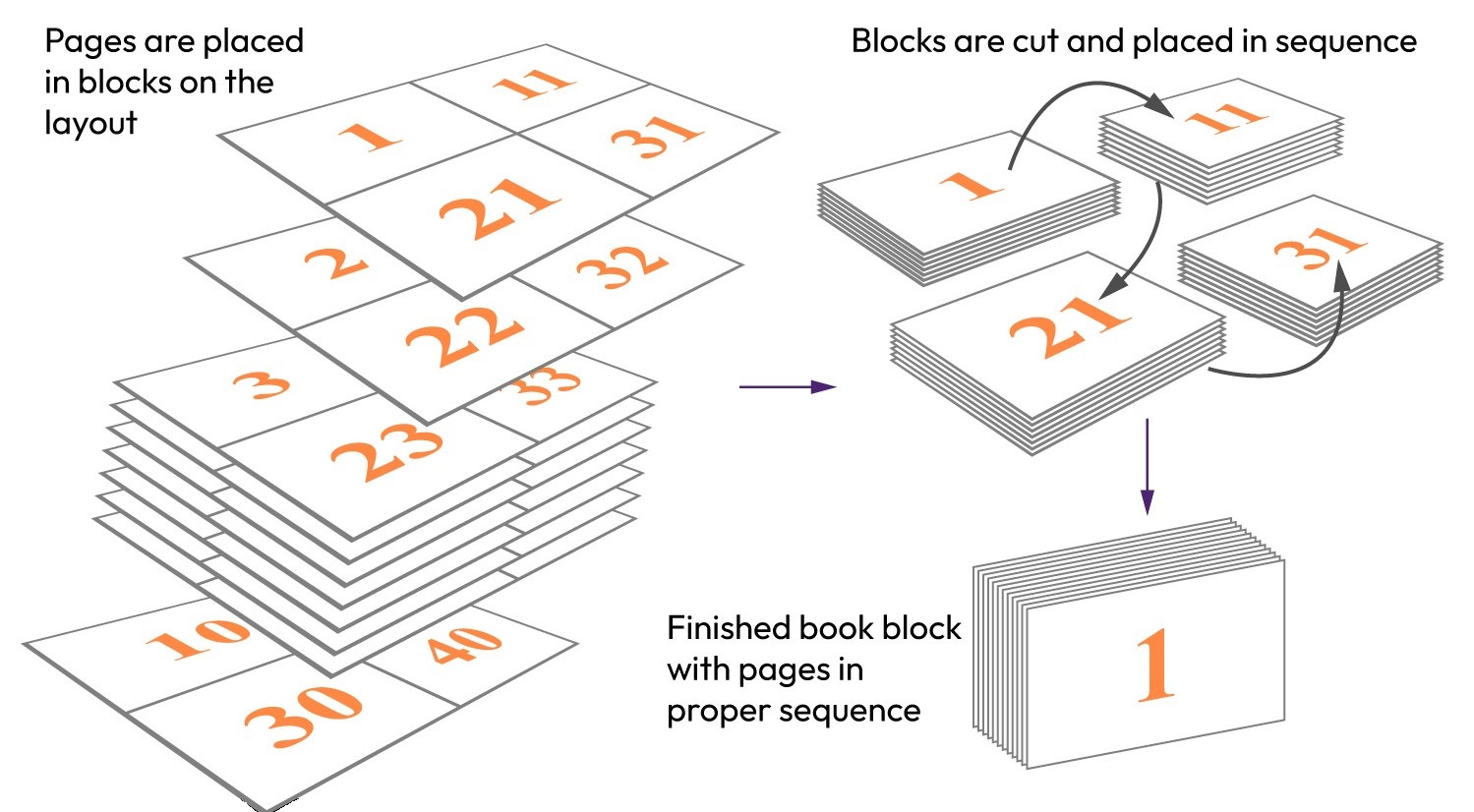
Cut-and-Stack Imposition arranges pages in a layered sequence on large sheets, enabling efficient short-run digital printing and easy assembly (especially for books, manuals or brochures, including variable-data work) by cutting and stacking; it is commonly used with wire-o binding and ensures fast, accurate production of multiple versions.
In the evolving world of print, understanding different book imposition styles isn’t just a technical necessity it’s a pathway to smarter production, better margins, and superior quality. Whether you’re printing 10,000 novels or 10 personalized books on demand, the right imposition approach can make all the difference.
Book printing today has become versatile. Digital printing and smart bindery have empowered to meet the demand for short run (as low as 1-book) delivery in span of 12 hours. With production demand of hundreds and thousands of books per day, the need for unmanned, dynamic imposition with ability to impose 100 or more books per minute is the need.
InSoft’s Imp software streamlines book imposition across all production ranges from high-volume offset runs to on-demand and web-to-print jobs. It’s intuitive graphical interface, interactive JDF Folding Template Database, and configurable binding methods ensure precise layouts without the need for scripting or complex rule-based automation. Seamlessly integrating with existing systems, Imp software by InSoft Automation eliminates bottleneck with rapid imposition.